
Boost your child’s speech at these 5 key times!
In the new year there is so much out there about new habits and new routines, but what if you could support your child’s speech & language skills without having to develop a whole new routine? Wouldn’t that be ideal? Well in this blog post I explain how you can do just that!
Let me start by explaining why this is a valid and important thing to do by referencing my cat – Richard Parker (note: he is always referred to by his full name, and yes that is extremely embarrassing when you are trying to call him in from outside).
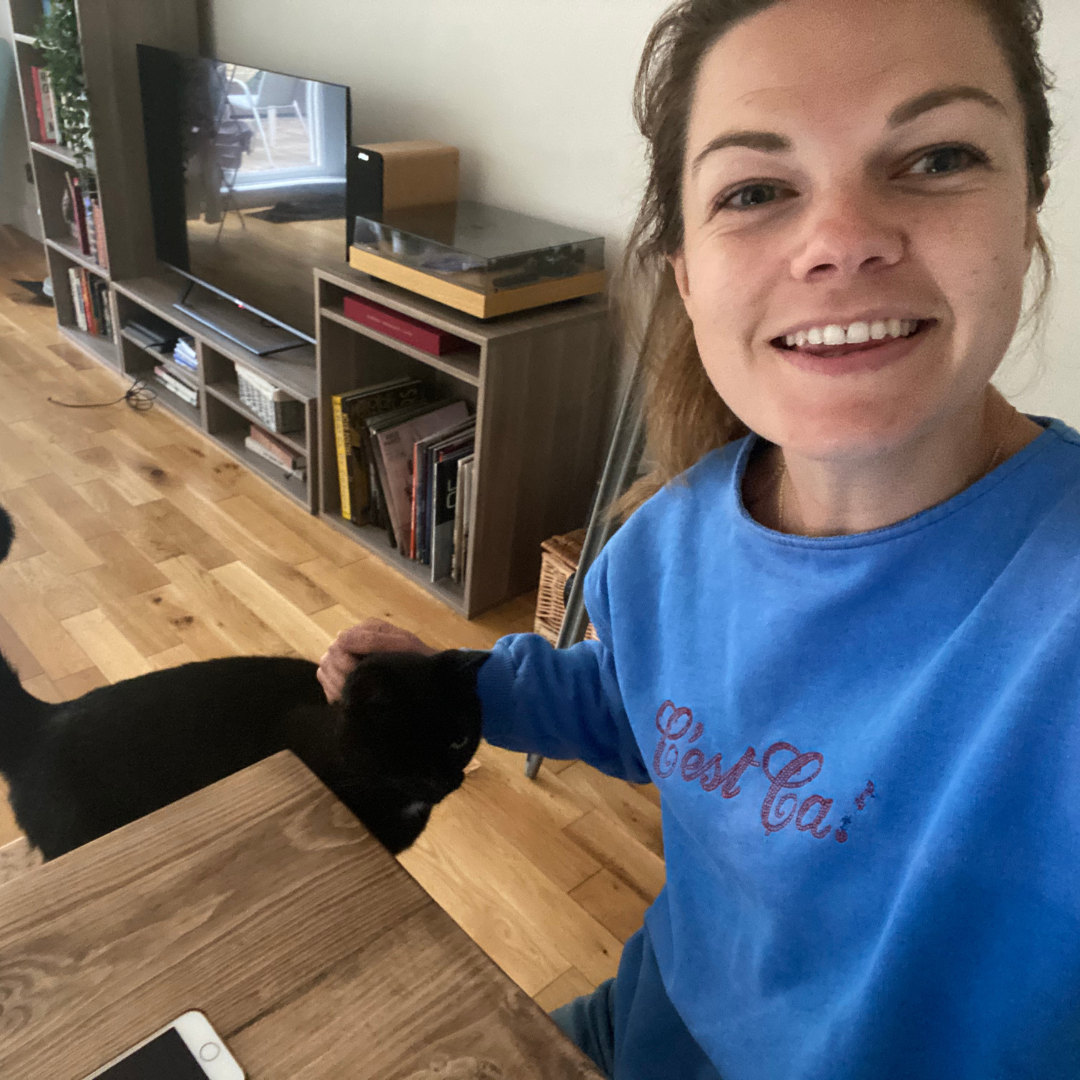
Richard Parker has come to understand pretty well what is happening day to day and that is through the power of routines.
For example, when he comes in from outside in the winter I wipe his paws so that he doesn’t get muddy wet footprints everywhere, he completely allows me to do so because we have built a routine around it.
It looks like this… he comes in, as I open the door I say “let me do your paws”, I then pop him on a towel and count “1…2…3…4” as I do all four paws, then I say “good boy Richard Parker, come on then” to which I go get a treat out the drawer which he follows me over to.
Now of course I am not comparing your child to my cat, but I am simply making the point that if Richard Parker can (broadly!) understand the concept of me counting his paws, then there is some serious power in routines.
Ok let’s get into it then, which routines can we maximise and how! I break down 5 key routines you can use to boost your child’s understanding and expressive skills.

Breakfast time!
The key thing to think about during breakfast is what parts can be choices & which parts are fixed, and to try and repeat this process each time. For example, there may be a certain breakfast your little one always has, but perhaps the bowl or plate can change.
So it might look like this…
Fixed: Toast is in the toaster, you say “your bread is toasting” (whilst pointing to the toaster).
Choices: “which plate do you want today? Chase or Rubble?” (whilst holding up the two plates). “ok great – the Chase plate!”
Fixed: the toast pops up and you say “toast is ready”, you put the toast on the plate and take the butter over
Choices: “who is going to butter the toast? Mummy or Emma?” (whilst gesturing to you and them).
If your mornings are anything like mine, you may not have time for this decision making from your little one! If that’s the case don’t worry – save this for the weekend, and during the week instead just focus on commenting on what is happening (e.g. “toast on the Chase plate...yummy!”).

Getting dressed!
Now the same applies as breakfast time, think about the things that are fixed (e.g. if it’s winter we are wearing a jumper!) and the areas where choices can be given (e.g. the colour of jumper). It’s consistent and repeated exposure to words that allows us to understand and use them, which is why routines are so useful for supporting communication.
Again, if you have the time, add some extra concepts into this routine…
- Can the sock jump over to their foot?!
- Can the top fly over?!
- Can the trousers roll over to them?
Comment whilst you are doing all these things, by doing so you are teaching action words in a new context!

On the walk to nursery!
On the journey to nursery comment/ label the things you see/ hear/ smell on the way (e.g. “I can hear the bin lorry”, “it’s very smelly!”, “can you smell the rubbish?!”).
To step this up a notch, try to have a theme of the month (e.g. transport, or, nature, or, weather), and focus the majority of your comments around those areas (e.g. “wow look the bus has big wheels! The cars have small wheels”). By having a theme you give your little one the opportunity to learn different words they may not have come across yet.

At the park
The park has to be one of the best places for teaching action and descriptive words (swing, climb, slide, fast, slow, high)!
For this one I would simply comment on what is happening “look at you, you’re sliding! You’re sliding so fast!”.
It’s also a nice place to model language around turn taking, and I am sure there will be opportunities that present themselves where you can model self-advocacy skills too “Emma was next to go down the slide, it’s her turn now”.

Bath time
Go back to basics with this one and think about the choices and fixed parts of this routine. Can there be choices around bath toys? Are there choices around bubbles? Pjs? Towels?
Use visuals whilst giving choices e.g. “do you want the blue bubbles or the pink bubbles” (whilst holding up the bottles). Otherwise, these concepts can be too abstract, and the effort involved in recalling what the blue bubbles actually are can make children switch off altogether.
Are you going to give this a go? If you are drop me a DM with a cat emoji so I know you read this blog post and can check in with how you’re getting on.

What should I expect from my 3 year old’s speech & language skills?
Now there are mixed opinions on norms and how helpful they are, but you are here for a reason! You are wondering what is your 3 year old’s communication ‘supposed’ to look like.
So let me help you by answering that…

Firstly, all children develop at their own rate!
However… we do have norms or milestones for a reason.
They are there to help us see if children maybe need a little extra support, and helping-hand guiding them in the right direction. They aren’t there to be scary, although, as someone who has turned to google themselves in times of worry – I get it! It does feel scary.
So let me say here, if your little one isn’t quite where they ‘should be’ don’t worry – we can support them. There are absolutely things that can be done to make communicating easier and less frustrating for them.
Ok onto what we expect at 3…
Let’s start with the big hitters! The things you will notice if they are there or are not quite there yet.
Words! How many words are we expecting at 3 years old?

Typically at 3 years old we expect little ones to have over 250 words in their vocabulary.
We expect children to be putting these words into 3+ word phrases. For example they might say “In Arthur’s car”, “Mummy eating apple”.
They should be understood 75% of the time by a non-familiar adult (so 3 out of 4 words should be understood).
In my experience, it is the amount, or lack, of talking that tends to bring parents to my door (or my inbox!), but it isn’t just talking we want to look at and support.
Even if your little one finds talking easy or hard, you may find they have unexpected strengths in these other areas…
What other communication skills are we expecting at 3 years old?
At 3 years old we expect little ones to:
- Follow simple instructions (e.g. “go get your shoes and coat”).
- Can answer simple ‘wh’ questions (e.g. “who is that?”, “what are they doing?”).
- Understands early concepts (e.g. “in”, “on”, “big”, “small”).
- Can copy the actions of adults.
- Will notice and look for a missing toy.
- Will watch other children play and join in.
- Will defend their own possessions.
- Can engage in a variety of play (building, puzzles, drawing, make-believe play).

This is not an exhaustive list of all the skills we are expecting but it gives a sense of the things we are expecting at 3 years old.
If your little one isn’t meeting these milestones or you have questions about their development you can:
- Speak to your GP or health visitor.
- Refer yourself to your local NHS speech therapy service (most pre-school services allow self-referral but check with your local service).
- Search for a local private Speech & Language Therapist via the ASLTIP website.

Want to work with me?
I am taking on face to face clients who are based in South West London, and offer online consultations for everywhere else! (Including the rest of the UK and international families).

When should I worry about my child’s speech delay?
When should you worry about late talking?
How do I know when to panic!?
Ok the title is a bit dramatic (can you tell I did a GCSE I drama!?) but I was asked this question this week. When is it just a child developing at their own rate vs. when should you ‘worry’.
The person I have having this conversation with was telling me how stressful they find milestones. Which I totally understand. They don’t give s true picture of what’s going on, and it feels horrible to stress particularly if that stress is not needed.
The other side of that argument involves something to do with burying heads in sand and early intervention being the best. So here are my recommendations on what to do if you’ve check the milestones and your little one isn’t quite where they should be.
0-3 months behind where they should be:
This falls into the ‘every child develops at their own rate camp’ I wouldn’t worry too much about your little one being ‘behind’. There is never any harm in following good communication practice (basically all the advice on my blog or Instagram page) e.g. getting down at their level, replacing questions with comments, repeating back what they say, following their interests etc. and I many cases this will be enough to support your little one’s continued development.
4-7 months behind where they should be:
This is the stage when we want to start being a little more ‘active’ with looking for support. So this might be you if your child is 2 & 1/2 years old and is using single words but not yet 2 words together.
Things to do here: follow the same advice as above (good communication practice) and get those referrals in. NHS referrals can take a little while, and if by the time you’re at the top of the waitlist your child no longer needs support then no one has lost anything. This does happen by the way! Some children are a few months ‘behind’ for a bit and then just get there in their own time, but there is no harm making that referral.
Who should you refer to?
- Audiology for a hearing test
- Speech therapy or flag that they need support with communication, depending on their age and where you live this initial support might be provided by a health visitor or another service. If in doubt raise this with you GP.
My next parent training course is also appropriate for you if you’re in this bracket. The course increases your child’s ability to express themselves, reduces their frustration, and empowers you to understand their communication strengths and needs.
8-12 months behind where they should be:
If your little one’s delay is approaching 12 months then this is the time to get them that extra support. Previous recommendations are valid, in addition make their nursery aware of their communication needs, ask for a plan to be put in place to support them and if they can make a referral to any services that can support your little one.
If you haven’t already made a referral to speech therapy, do so, and ask how long the wait is likely to be.
If your little one is under 4 my parent course is still appropriate for you. I also have online and in person 1:1 support appointment slots available. Get in touch if you want to know more.
13 months+ behind where they should be:
If you are reading this and this is your little one, please don’t panic. The fact that you’re reading this is a sign to get your little one some support. All the previous recommendations apply and…
- Have a chat with your GP about your child, sometimes they have a bit more power to get children seen sooner or to put additional referrals in.
- It might be that it is worth having a paediatrician involved as, unlike GPs they are specialist in child development and will know what support your little one might benefit from.
- It is really key to have open conversations with your child’s nursery and find out what support they are putting in place to help them. They may discuss an IEP (individual education plan) with you which is a way for them to put really specific (as opposed to generalist) support in place for your child, and track their progress.
They were developing typically and now they have paused or regresses:
This is something to keep a close eye on. It can happen when there is a bit of change in little one’s lives so isn’t always something to worry about. It can however indicate an episode of hearing loss or that there are some differences in the brain going on so it is an important thing to keep an eye on.
Record keeping is key here. I would recommend:
- Writing down when you noticed a change happening and what that change was.
- Putting a reminder in your phone/ calendar to check in a month to see where you are at. Are they still regressing or have they resumed where they were?
- If there is a rapid regression over a short space of time and things do not feel right contact your GP.
- If the regression is steady and goes on for 4+ months, contact your GP and follow my recommendations on referrals & support listed above.
They are doing things outside of ‘typical’ development:
This is one to keep an eye on. It depends on what your little one is doing, and if it is impacting them. Are they able to follow instructions, express their needs and make friends? If yes, then keep an eye on things and if any of those things change it is worth speaking to your GP. If they are struggling then get those referrals in, it’s particularly worth speaking to nursery as they may have a different learning style that needs us as adults to adapt to.