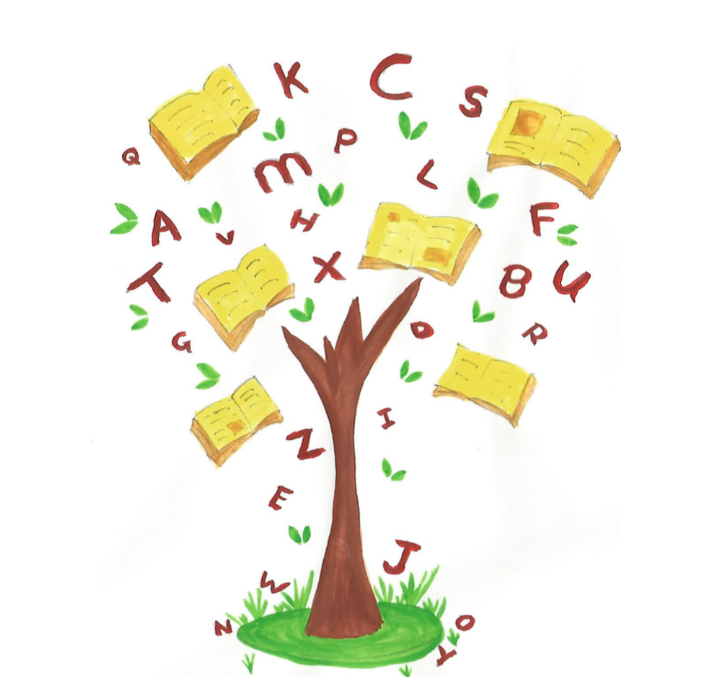

Communication Tree (or Pyramid)

So this is the "communication tree". The 5 main components needed for effective communication. Of course, each of these can be broken down into smaller elements but we don't need that level of detail right now.
I wanted to talk about this communication tree this month to illustrate how complicated effective communication really is.
If one of these components is tricky it can really impact on communication skills.
Often as therapists we want to first work on attention and listening skills as this is a foundation for communication. If you aren't attending to someone while they are talking to you it is going to be difficult to absorb and understand what they have said and respond appropriately.
If little ones have lots of language but can't use this language in a functional way then, all that vocabulary goes to waste. Sometimes, even though the goal is to develop stronger talking skills, we have to consolidate those foundations first to ensure that when we do come to working on grammar, vocabulary and speech sounds, little ones are able to use all these lovely new words in a meaningful way.
When thinking about your little one, it can be helpful to have this tree in mind and think about which areas are strengths for them and which areas are more tricky. That way you can look out for activities designed to boost those more challenging areas. Knowing that working on those foundations leads to stronger communication skills in the end!

Speech or language - demystified

Speech delay vs. Language delay - you may have heard these terms, but what do they mean?
What is speech?
Commonly we use the word 'speech' to describe anything that we say but this is not actually what it is!
"Speech" only refers to the sounds we make. We expect children to make errors when learning to talk (for example saying “lellow” for [yellow]. We consider a child to have a Speech Delay when these errors persist for longer than expected.

What is Language?
Language is often what we think of when are referring to when we say 'speech'!
"Language" refers to the words we use and understand. It also refers to the order in which we use these words (syntax) and the way we show things like plurals, tenses and pronouns (grammar).
Why does the difference between speech & language matter?
The reason that we care about the difference is because it affects what we do.
We choose different therapy approaches depending on what the underlying difficulties and strengths are.
In the same way you wouldn't want an asthma inhaler if your problem is with your heart! We wouldn’t want to choose a speech intervention if the difficulty is with language!
For many children, the difficulty is with both speech (sounds) and language (words), but for some it's one or the other!
Have a think about your little one. Does this make you think differently about their communication skills?

Help my child is starting School!
How to use social stories to help your little one transition to school in September
Starting school is a daunting change for parents & their little ones, social stories are a tool you can use to make the transition easier! Read on to find out how…
Social Stories were developed by Carol Gray in the 1990s as a way to help Autistic individuals understand and navigate social situations more effectively.
Today they are used with children with a range of speech & language differences.
Social Stories use simple and concise language along with visual supports to provide clear and concrete information about expectations, routines, and behaviour.
Here’s how you can use a Social Story to support your little one in the transition to nursery/ school this September.

Perspective: write a story for your little one from their perspective (e.g. “I am going to Battersea Primary School”) as opposed to a general perspective (e.g. “children are going to big school in September”)
Length: the story should be brief but should be as specific as possible.
Visual Supports: include specific visual supports relevant to the story (e.g. a drawing of the school, a photo of the school uniform).

Tone: The tone should be encouraging and positive, the aim of the story Is; to reduce anxiety, improve social understanding, and promote positive social skills.
Repetition: read the social story with your little one multiple times in the lead up to going to school (e.g. 1-2 times a week and then every day in the week before school start).
Example social story script (relevant drawings/ photos for each line)…
Emma starts Battersea Primary School!
In a few weeks time I will go to Battersea Primary school.
I will wake up & have my breakfast with Mummy.
I will put on my school uniform.
I will brush my teeth.
I will walk to Battersea Primary School with Mummy.
I will go into the classroom and say hello to Mrs Edwards, my teacher.
I will meet other children, and we will play with new toys together in the classroom.
I will play in the playground and run around with my new friends. I can ask them to play chase.
I will have my lunch at school, Mummy will pack raisons, a cheese sandwich and rice cakes for me to eat.
After lunch Mummy will be in the playground to collect me and walk me home.
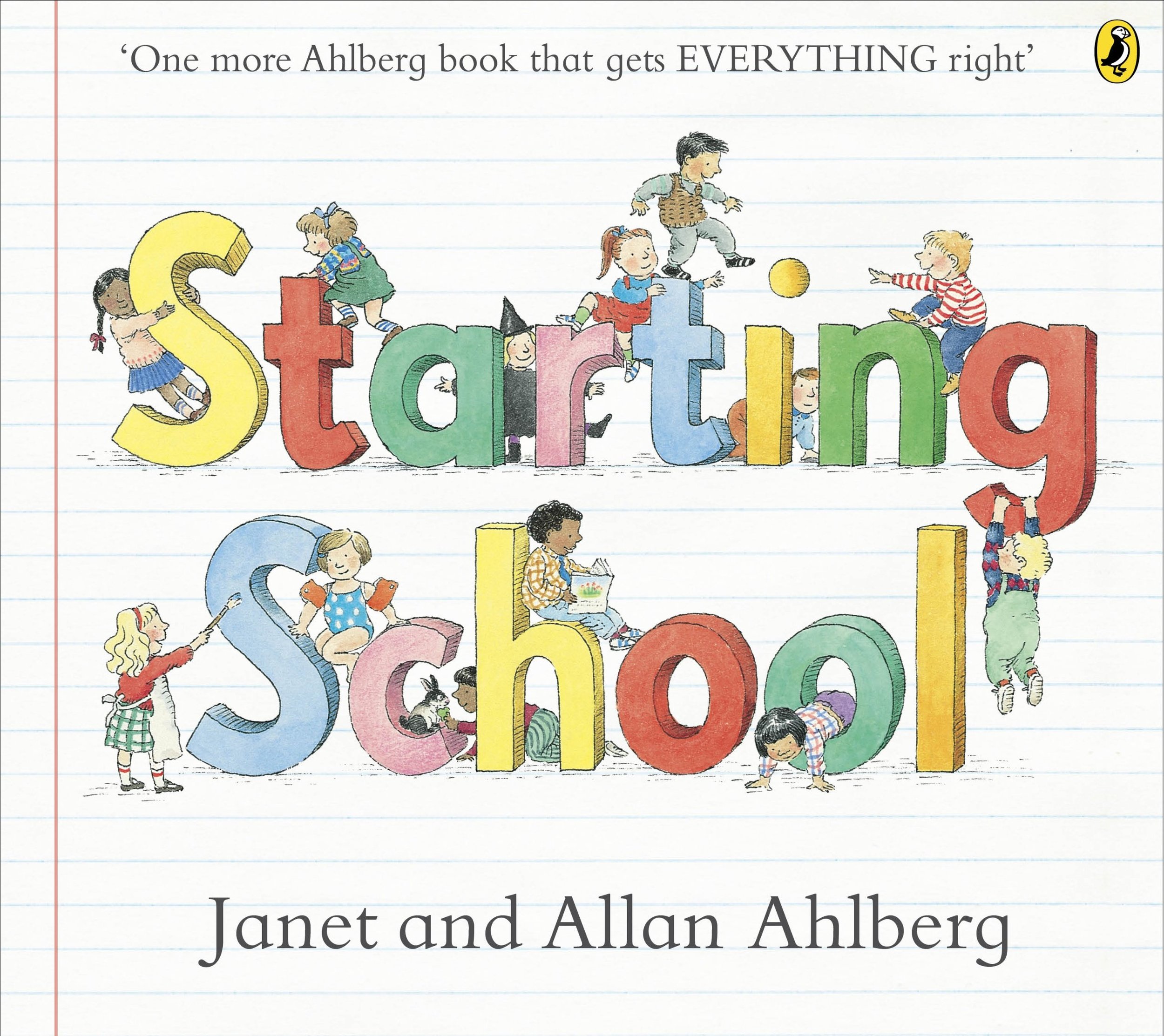
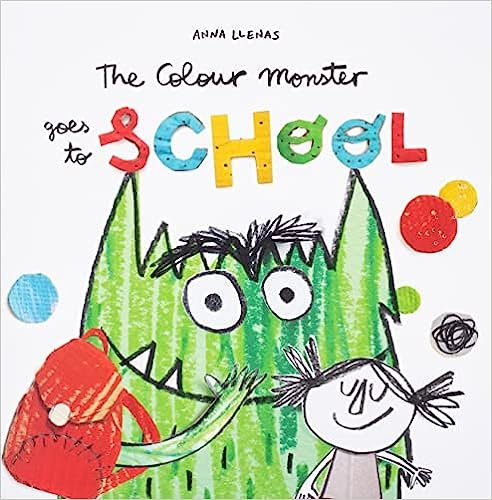
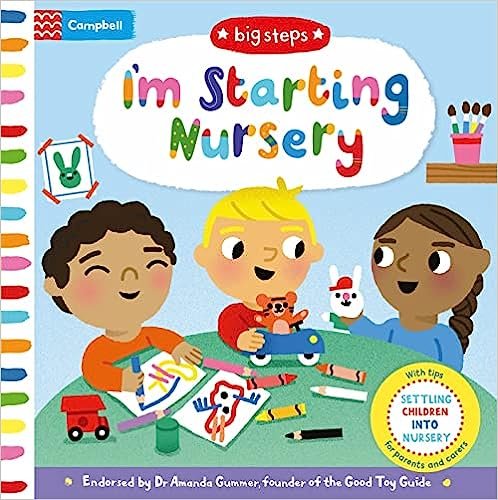
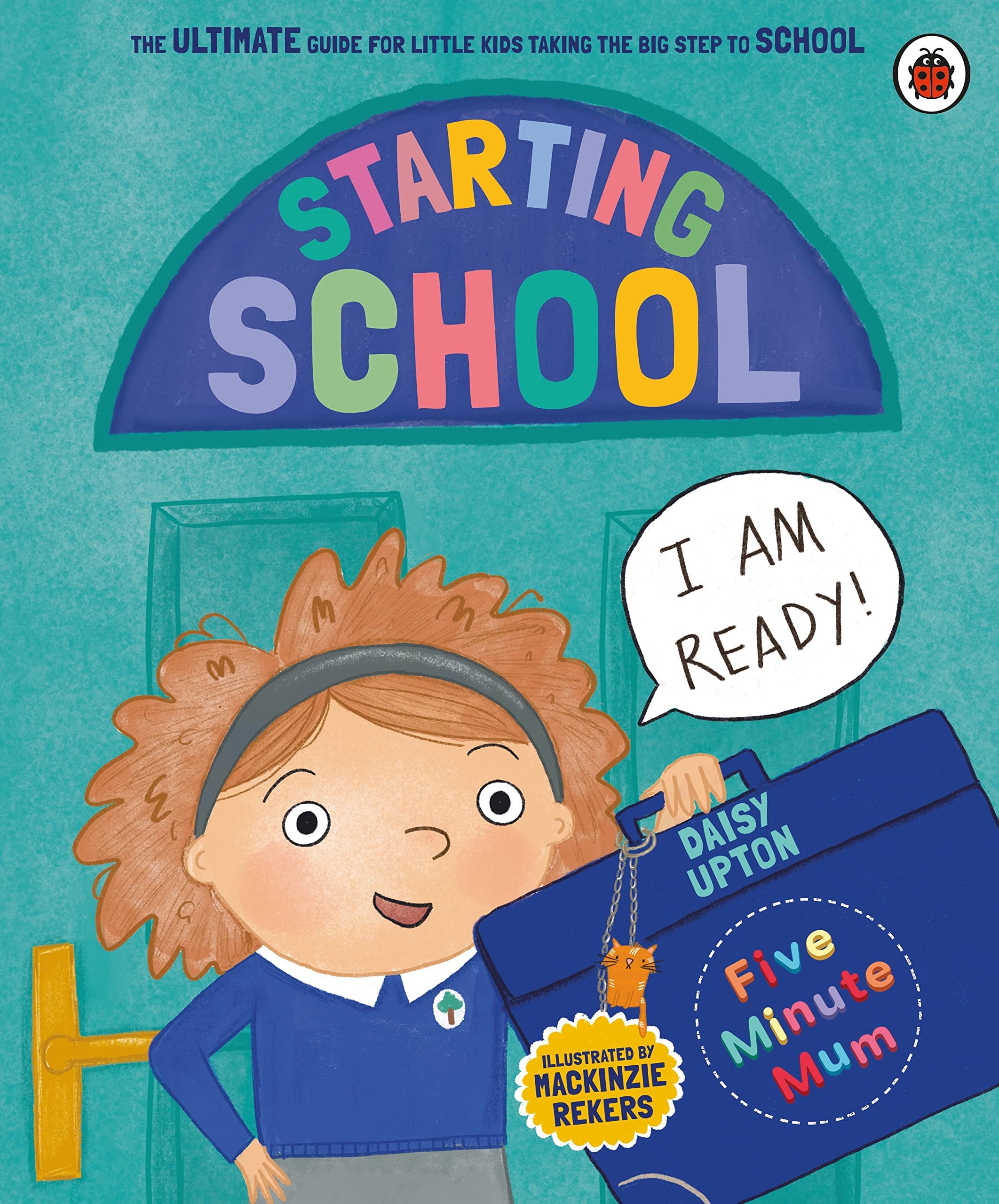
Other helpful books…
(Links are affiliate links which means I earn a small commission if you click through the link and buy)